
By Kaitlyn Liu
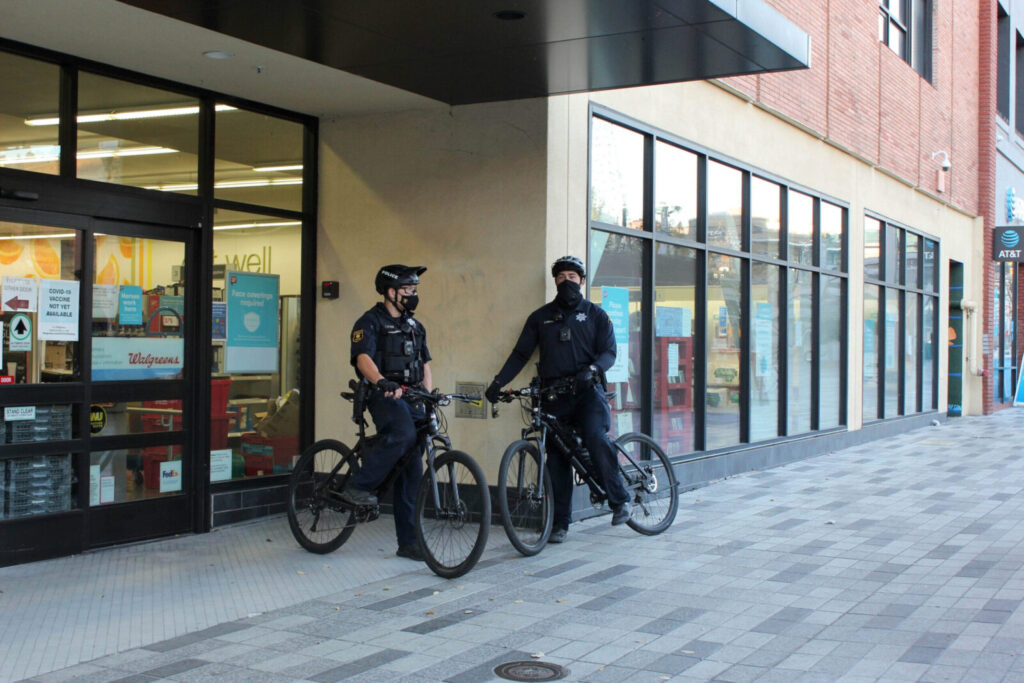
Berkeley is known as one of the most progressive and diverse cities in the country. With UC Berkeley close by, many assume that public schools in the city, at every grade level, offer strong and equal educational opportunities for their students. Unfortunately, reality tells a different story. Berkeley Unified School District (BUSD) has one of the largest achievement gaps in the United States and continues to face issues linked to what experts call the “school-to-prison pipeline,” as two Berkeley High School journalists show in a 2021 article, “Police Presence on BHS Campus Proves Controversial.”
High Overall Scores Hide Big Gaps in Education Performance
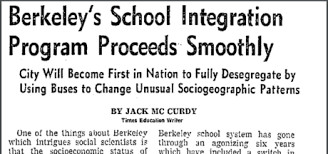
Shortly after the decision in Brown v. Board of Education (1954), school districts around the nation were instructed to integrate. However, resistance and delays continued across the country for many years. BUSD was the first sizable district to fully desegregate without a court order. The integration enabled some students to excel, but differing performance outcomes continued to persist. Numerous programs were enacted to aid this issue such as the Berkeley Schools Excellence Program (a local tax amongst the community to support education initiatives) and facilities bonds. While over the years there were some improvements for Asian Americans and Latinos, Black students’ performance worsened.
On paper, BUSD seems to be doing well in their educational achievement among its students. Data from the Stanford Education Data Archive shows that, on average, students in the district score above the national average on standardized tests. The “Stanford Report on Educational Opportunity in the U.S.” uses test scores from 2009 to 2019 in order to understand how various social and economic conditions influence student learning.
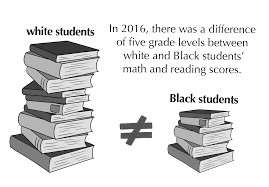
However, when looking beyond the overall numbers, serious disparities in student achievement are evident. The data shows that:
- Low-income students score 1.5 grade levels below the national average
- High-income students score 2.25 grade levels above the national average
- White students score 2.97 grade levels above the national average
- Black students score 2.17 grade levels below the national average
This indicates that low-income and high-income students are almost four grade levels apart. The gap between Black and white students is even larger with over a five grade level gap.
The School-to-Prison Pipeline
These educational disparities are not just academic. The disparities overlap with systemic issues in students’ lives that feed into the “school-to-prison” pipeline. The school-to-prison pipeline is defined by disciplinary and institutional practices that are disproportionately enforced against marginalized students likely to push them toward the criminal justice system.
Rather than using restorative or other supportive disciplinary measures, schools relied on suspensions, shame, and police involvement for relatively minor behaviors. These practices were disproportionately utilized against communities of color, and the effects still persist. For example, the BUSD states that “current & historical District data suggest that African American students are most likely to be suspended or expelled.” Exclusionary discipline heavily contributes to disengagement from education, lower academic achievement, and a greater risk of dropping out. All of these factors can increase the likelihood an underage individual will be involved with the criminal legal system because each of them increases shame in the student.
The Achievement Gap is Really a Crisis of Uneven Opportunity
These gaps exist because many students begin school with unequal access to resources and opportunities. Important contextual factors like family income, stable housing, early childhood education, and health all shape how a child views education. Education requires investment, and investment requires time, resources, and presence. Students from lower-income families often face challenges like food insecurity, limited access to academic support, unstable home environments, and exposure to stress. These challenges directly affect a student’s concentration and learning, and tend to deprioritize school.
Inside the school, additional reasons feed into the educational gaps between communities. Implicit bias, default lower expectations for Black and Brown students, and inconsistent access to quality teachers can influence how students are taught, disciplined, and encouraged. Suspensions, often enforced against marginalized students, remove students from the learning environment and damage their connection to school. When these school-based issues are present along with contextual factors, negative long-lasting patterns in academic performance persist.
What is Being Done to Address Inequity?
While the problem is evident through Berkeley Unified School District’s large achievement gap and its continued struggle with patterns linked to the school-to-prison pipeline, Berkeley is attempting to mitigate these effects and support their students in a number of ways:
The Equity, Achievement & Belonging (EAB) Department within BUSD leads efforts to improve culturally responsive teaching, properly training school leaders, and strengthening support systems for marginalized students

Targeted Equity Programs: focus on specific communities of students
- The African American Success Framework: A multi-year plan focused on improving outcomes for African American students through academic support, community building, and professional development. The plan was introduced in 2022 and is expected to run until the end of this year. The goal of the program is to improve academic outcomes, social and emotional well-being, and chances of long-term success.
- Umoja Program: A program that is implemented across the state of California. It is designed to support African American students, as well as other marginalized students, in understanding the context behind their situations. To elaborate, the program offers community, cultural exposure, and identity-affirming education. The goal of the program is to promote students’ understanding of students’ cultures, increase diversity, and strengthen students’ connections to the education system.

Universal Equity Programs: improving equity district wide, regardless of demographics
- Equity Professional Development for Educators: The district trains its staff to have professional training in culturally responsive teaching, the right environment for learning, eliminating biases during instruction, and restorative practices. The goal is to promote inclusion, diversity, and learning inside of the classroom all throughout the district in hopes of improving the educational disparities in Berkeley.
- Equity Leadership Development for Administrators: Professional development for school administrators on data analytics, racial context, discipline policies, and inclusivity. The hope with this training is to ensure school administrators understand the impact of their policies, practices, and overall attitudes toward disciplinary action.
- Increasing Demographic Diversity of Teachers: A plan from BUSD encouraging the hiring of teachers to demographically match the racial make-up of its students. Students feel more accepted, understood, and comfortable when their teacher looks like them. They are more willing to have a better attitude toward the education system.
This article has provided an introduction to the problem of the educational achievement disparity and school-to-prison pipeline in BUSD. Each of the proposed solutions mentioned above will be explored further through future articles. Interviews with different constituents and communities will be conducted and a more comprehensive narrative on the educational disparities in BUSD will be gathered. Interviewees in future articles may consist of: school board members, teachers, students, and city government legislators. Berkeley Speaks welcomes your comments!
Kaitlyn Liu is a fourth-year UC Berkeley honors student majoring in Legal Studies.