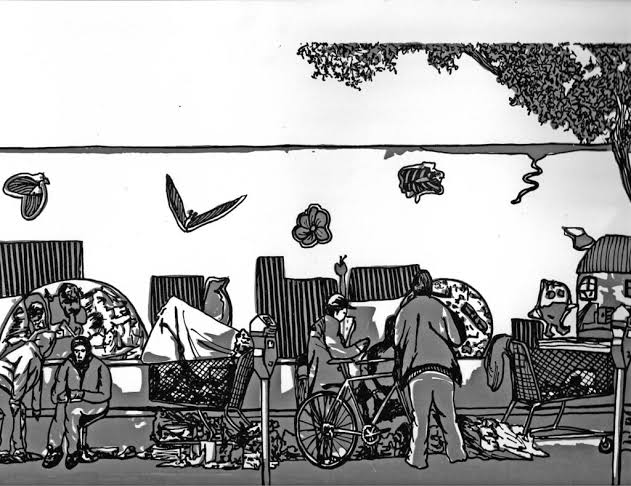
In our last edition (Fall 2025), Berkeley Speaks reported that “the Eighth and Harrison site is still protected by a Temporary Restraining Order (TRO). It was recently extended until January 13, 2026 due to the illness of an attorney.” [See “Unhoused: forward and backward we go, again”] This article explains the federal judge’s mixed but significant ruling this spring.
Berkeley can move forward with abatement, but not without court-imposed limits. On April 3, U.S. District Judge Edward Chen ruled that the City does not have to first secure non-congregate housing or specific shelter placements before abating the Harrison encampment, and residents do not have a court-recognized right to remain there until housing is available.
The court also said Berkeley does not have to create sanctioned campsites or enforcement-free relocation zones.
But the City cannot simply sweep, tow, or destroy shelter property. The court required individualized protections for vehicles used as shelter: before towing, impounding, or destroying a vehicle, Berkeley must make a specific fact-based finding that the vehicle obstructs traffic or creates a concrete health/safety threat, give written notice, allow a chance to fix or relocate it, and consider less drastic options like cleaning, pest treatment, or assisted relocation.
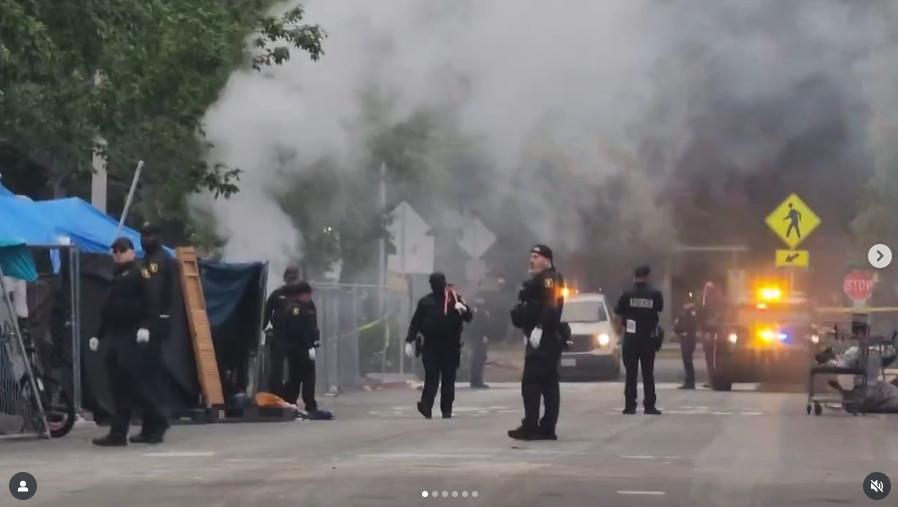
Tents and survival property are protected. For disabled residents, the City must provide packing/moving help when public-health guidance allows it, store non-contaminated property for at least 90 days, and replace essential survival property such as tents, sleeping gear, and basic clothing if destroyed because it could not be safely moved or stored. The City can refuse to handle items that are wet, muddy, or plausibly contaminated with leptospirosis.
The case is not over. The Berkeley Scanner reported that the matter is still set for trial in October 2026, and that the City has two active Ninth Circuit appeals challenging aspects of Judge Chen’s injunctions and the Berkeley Homeless Union’s standing/ADA claims.
The “3×3 rule” cannot be applied categorically. Berkeley must do individualized assessments for people with disabilities, and even for non-disabled residents the City may not enforce the 3×3 belongings rule in a way that prevents someone from maintaining a tent, so long as the tent does not unreasonably block sidewalk passage.
(The 3×3 rule, passed by the Berkeley City Council in 2018, limits personal property on a sidewalk to a nine square foot area. Judge Chen stated in his order that it is “virtually impossible” for a person to sleep in such a space,)
Public-health picture changed in June. Berkeley’s June 10 public-health update says no human leptospirosis cases have been associated with the Harrison Street encampments and no new canine infections have been reported there since the first two in late 2025. However, two human cases were identified in May 2026 in a severely rat-infested RV about one mile away; one person died and one recovered after hospitalization. The City is now retiring the Harrison-specific “red/yellow” risk zones and shifting to a broader citywide strategy focused on RVs and encampments with rat infestations.
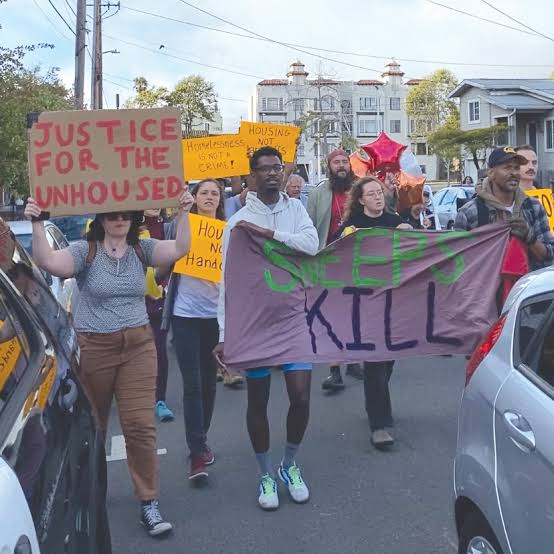
Bottom line: Berkeley has more legal room to close or clean the Harrison encampment than it had under earlier injunctions, but the City must follow ADA accommodations, property protections, vehicle-by-vehicle findings, notice, storage, and survival-gear replacement requirements. The biggest legal risk for the City is a sweep that destroys shelter, ignores disability accommodations, or creates “serial displacement” without a lawful place for people to survive.
Sources. www.courthousenews.com. www.nbcbayarea.com. www.berkeleyca.com, www.wikipedia.com.