On March 24, 2026, Mayor Adena Ishii and Council Members Lunaparra and Tregub announced they would not support City of Berkeley contracts with Flock Safety. In a Berkeley Speaks exclusive, we present statements from Mayor Ishii, several council members and city leaders.
Mayor Adena Ishii: “The public’s trust is compromised”
While I support the use of advanced public safety tools to assist first responders, I do not support our city contracting with Flock.
Everyone in Berkeley deserves to feel safe, but public safety is more than preventing crime. It includes the freedom to move without fear, to speak out without intimidation, and to trust that our city will protect its residents. Under the current federal administration, many in our community have legitimate concerns, and contracts are not always enough to ensure local laws and protections are upheld.
Flock’s track record raises concerns about data sharing and accountability. It becomes difficult to justify the use of Flock’s services when the public’s trust is compromised and there are legitimate fears that data could be used to target immigrant communities or suppress First Amendment rights.
There is no doubt that our first responders need effective tools to do their jobs. Surveillance technologies can play an important role in emergency response, investigations, and search and rescue. But their use must be balanced with strong protections for privacy, civil liberties, and compliance with local laws and values.
If no current alternative to Flock meets our standards, then we should wait for solutions that better reflect our community’s values and priorities.
I invite the community to attend two upcoming special City Council meetings regarding the Public Safety Technology item currently under consideration, which contains the Flock contract. On May 7, the Council will vote on this item and if necessary, come back on June 2 to finalize the contract.
I encourage everyone to learn more about the supplemental item I introduced with Vice Mayor Tregub and Councilmember Lunaparra.
Berkeley Mayor Adena Ishii. Credit KRON4
Council Member Cecilia Lunaparra: “I am not comfortable with waiting for my neighbors to get deported before we shut off these technologies”
I am adamantly opposed to mass surveillance in our city, and I am especially opposed to extending and expanding the city’s contract with Flock. In the initial ALPR contract that Flock signed with the City, they promised that they would not work with ICE. Flock lied. They turned right around and started a secret pilot program with HSI, division of ICE, and only ended it after massive public backlash. Our Sanctuary City Contracting Ordinance is very clear that Flock violated the laws of Berkeley and our contract, and I do not believe that accepting “whoops, we won’t do that again” and a relatively tiny fine for a multi-billion-dollar corporation is sufficient.
Even if we take Flock at their word that our data will be 100% protected, and that Flock ALPRs have been a useful tool for BPD to solve crime, I still have not seen any evidence that Flock has made a measurable impact at preventing crime in Berkeley. Every statistic I have seen shows that crime was going down significantly before the ALPRs were installed, including the presentations from both BPD and PAB at the March 24th City Council meeting. Yet, companies like Flock, which are funded by some of Donald Trump’s largest donors and have worked directly with ICE, are preying on our constituents’ fears to take our tax dollars and our data.
Donald Trump has overtly identified UC Berkeley and the City of Berkeley as targets. By approving these contracts, we would be making it easier for his administration to access footage and data of our community members who are disproportionately immigrant, queer, low-income, and activists. District 7 has a median age of 19 years old, and younger people are more likely to seek and access reproductive healthcare services like contraception and abortion, which are now under extreme attack. I am unwilling to put the lives of my constituents in danger. Our immigrant, queer, and activist communities—already targeted by systemic violence—should not be made to feel even more unsafe in their own neighborhoods. These communities are disproportionately impacted by surveillance, further eroding trust in institutions that claim to serve and protect us.
There is safety in numbers; communities are safer when streets are full of people. That’s why I support increased street and sidewalk lighting, public realm improvements, and more neighborhood events to increase foot traffic. The addition of new surveillance technologies in my district is contradictory to this goal because they deter many Southside residents, especially the vulnerable populations currently under attack by the Trump administration, from spending time in Third Spaces, which will cause foot traffic to decrease and make Southside less safe.
Even if I had full faith that this data could never be shared with the federal government, which I don’t, many of my constituents would believe this to be true. perception is reality, and even if these cameras were fully safe from ICE, many of my constituents would still frequent surveilled areas less often, which, again makes the intersection less safe. in a perfect world, these cameras might keep us more safe, but in reality, more cameras in my district will make my constituents less safe.
Flock keeps violating the law and getting caught in lies. How many “mistakes” will it take for us to learn that we can’t trust them? I am not comfortable with waiting for my neighbors to get deported before we shut off these technologies. As a city, we can do better. We can do better than mass surveillance, and we can do better than Flock.
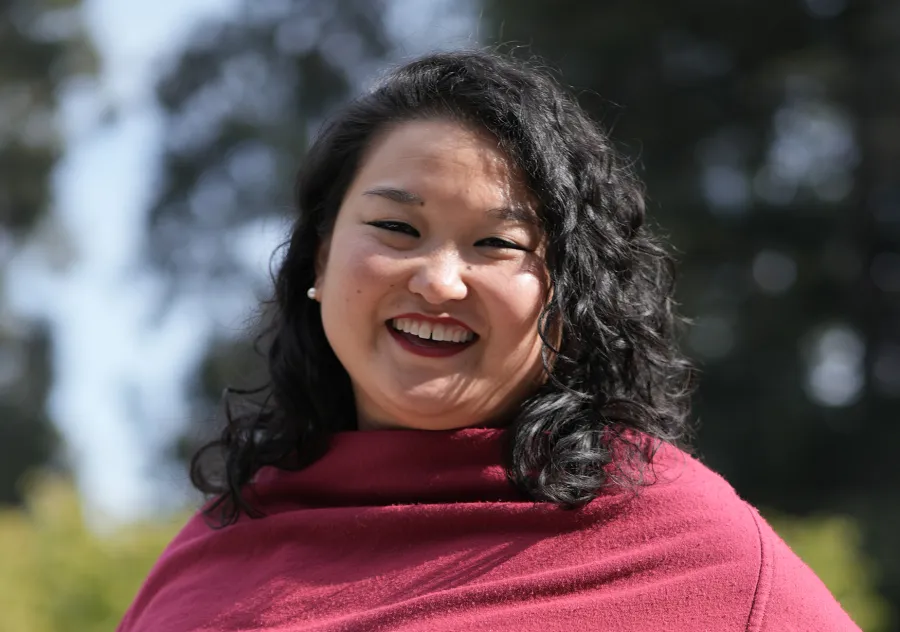
Cecilia Lunaparra, Berkeley City Council. Credit LPAC.
Council Member Igor Tregub declined to offer a statement but referred to the Ishii/Lunaparra proposal: It is “in the public interest to reject any renewal, authorization, approval, or execution of a contract with Flock Safety.”
Reject any renewal, authorization, approval, or execution of the Flock Safety contract.
Flock’s violations are numerous. In recent years, at least 30 jurisdictions have paused or terminated their Flock contracts due to concerns about impermissible data sharing with federal law enforcement agencies, including federal immigration enforcement agencies.
Within California, at least 7 jurisdictions have deactivated their cameras or canceled their contracts with Flock. Most alarmingly, in Ventura, CA, an audit found that “out-of-state agencies accessed the Ventura County Sheriff’s Office’s data more than 364,000 times between February and March [2025] without the department’s approval or knowledge.” The Sheriff’s Office in Ventura County confirmed that it had disabled the “National Look Up” feature within the Flock system, in order to comply with California law, but that the feature had been reactivated without any notice or explanation from Flock.
Several Bay Area cities, including Santa Cruz, Mountain View, and Los Altos Hills, have paused their flock cameras after “discovering that federal agencies could search the camera data, despite the firm’s assurances otherwise.” The Mountain View Police Department stated in a January 2026 news release that several federal law enforcement agencies accessed its ALPR system data through the use of the “nationwide” search setting that was turned on by Flock without Mountain View Police Department’s permission or knowledge.
In Los Altos Hills, the City Council voted to “remove its Flock Safety automated license plate reader cameras around town, citing concerns about data privacy, cost considerations, and overall effectiveness.” In each of these cities, Flock made contractual commitments to its clients and failed to abide by them.
As a Sanctuary City, the repeated violations of Flock contract terms pose a risk to the community, including but not limited to Berkeley’s immigrant residents.
Single-vendor consolidation introduces additional risks. In its March 18, 2026, letter to the City Council, the PAB explains that while there can be operational benefits to a single vendor ecosystem, there are also significant risks in integrating surveillance data and creating dependency on one private company.
Council Member Ben Bartlett also declined to offer a statement. In his remarks at the April 24 City Council meeting he stated that not one of his constituents told him they support Flock.
“I’ve talked to many, many of my constituents. Not one of them supports it. They are fearful of the company we’re working with, because of what they’ve observed, and what they’ve heard, and what they’ve seen.
And the impact, it’s all around us. People are living scared, they’re getting abused, there’s a secret police force loose in the country, they’re dragging people around, and people feel that. So I want you to know, I want it to work. I do the job to make things work for people.
…As we negotiate the scrimmage line between security and liberty, District 3 has chosen liberty. 100%.
Ben Bartlett, Berkeley City Council – Facebook
2026 District 1 Candidate Moni Gangopadhyay (video): “On May 7, this is a critical time to show up [at 5pm City Council meeting] and say no, we do not want Flock in our city, cancel all Flock contracts, and keep our city the Sanctuary City that it has always been.”