
The danger of collaborating with the feds—not just with ICE.
The No Flock campaign expanded the idea of Sanctuary beyond just non-collaboration with ICE. Last fall, on Council Member Lunaparra’s motion and at the urging of the Berkeley Immigration Collaborative (BIC), the council added an additional target to the City’s Sanctuary Contracting Ordinance (SCCO). In place of the original language banning contracts with ICE, the new language bars contracts with a vendor that provides “Data Broker” or “Extreme Vetting” services to any Immigration Authority, defined as:
“Any federal, state, or local government officer, employee, or person who is legally authorized to enforce, or who is tasked with enforcing, any federal immigration law against natural persons.”
One purpose of this expansion was to include vendors working with Customs and Border Protection (CBP), which has played a major role in mass sweeps alongside ICE since 2025.


But the shocking scenes of the winter and spring in Minneapolis-St. Paul and other cities brought many in the movement further questions about the definition of “immigration authorities.” While ICE and CBP shot to death the innocent Renee Good and Alex Pretti, other agencies gave direct or indirect support to the invasions of these cities.
The Justice Department, through its agencies including the FBI, DEA, ATF, and U.S. Marshals, participated in arrests and detentions. The IRS conducted financial investigations of opponents. The Pentagon, especially through the National Guard, was heavily utilized in occupations of “blue” cities.

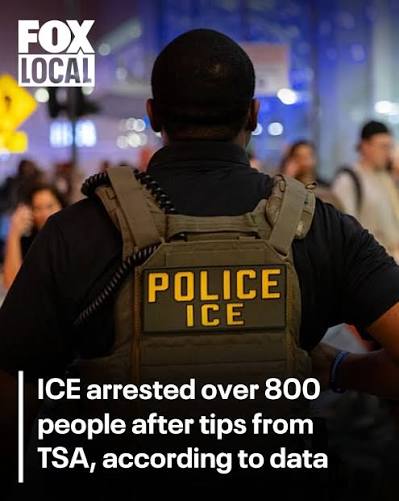
The Department of Homeland Security (DHS), the parent body of ICE, is the host of the national network of “intelligence fusion centers.” The Berkeley Police Department is a member of the Northern California Regional Intelligence Center (NCRIC), based in San Francisco. So are ICE and CBP. The purpose of the fusion center, which is funded by Homeland Security, is to share law enforcement information among members in both directions between federal and local agencies.
NCRIC makes this promise:
“The NCRIC will not share, disseminate, or sell any law enforcement data to law enforcement agencies outside California, federal law enforcement, any private entities or individuals, or any organization whatsoever for purposes related to immigration enforcement.” [Emphasis added]
For more information on NCRIC’s policies on ALPRs, including admission of numerous potential individual and social harms from ALPR use, see this 2013 Initial Policy Impact Assessment for ALPRs. (These statements do not appear in the current (2024) NCRIC ALPR policy.)
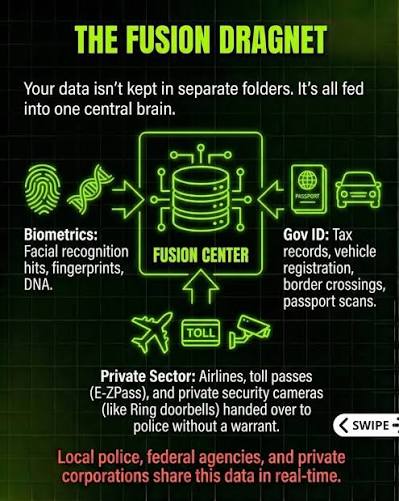
But serious questions have arisen about how safe Berkeley is in the relationship with NCRIC. NCRIC hosts each of the DHS agencies and regularly shares data with these agencies, including ICE and CBP, as well as DEA, FBI, the US Marshals, and others.
Secure Justice, a local privacy and civil liberties non-profit, has shared with Berkeley Speaks the City’s response to a Public Records Act request for details on NCRIC’s access to this very sensitive information. Secure Justice reports that BPD has given NCRIC “direct unfettered access” to our Flock ALPR data and that NCRIC has viewed our Flock records over 86,000 times in two years (2024 and 2025).
The impact of the Secure Justice discovery is that Berkeley has opted-in to another back-door way to provide its ALPR records to ICE and CBP.
Word of another breach broke on June 17, 2026, as the San Francisco PD announced that its Flock ALPR database was illegally queried by NCRIC on behalf of out-of-state and federal agencies, 299 times in the last year. NCRIC made similar requests to somewhere between 531 and 763 other departments.
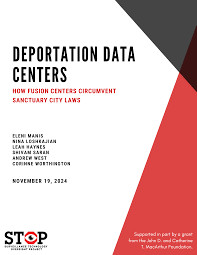
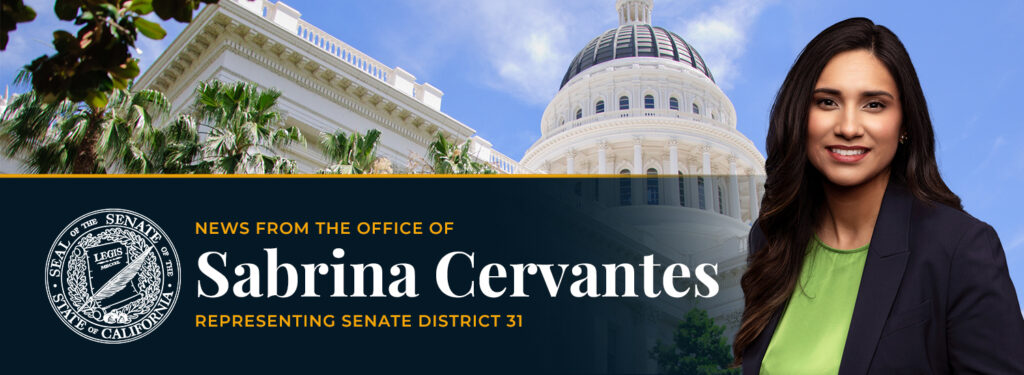
On March 27, state legislators approved an audit of three of the state’s federally-funded fusion centers, citing concerns about civil liberties and privacy.
The audit legislation’s author, Senator Sabrina Cervantes, said in a press release that “Forty million Californians deserve to know whether these centers are serving their intended counterterrorism purpose — or whether they have become unaccountable surveillance infrastructure operating in the shadows of our democracy.”
In 1973, Berkeley’s voters mandated annual city council review of the police department’s external relationships with law enforcement, intelligence, and military agencies. That law remains on the books today.
Now would be a good time to conduct a closer examination of the benefits and risks to Berkeley of relationships with all of Trump’s agencies, and local ones who collaborate with them.