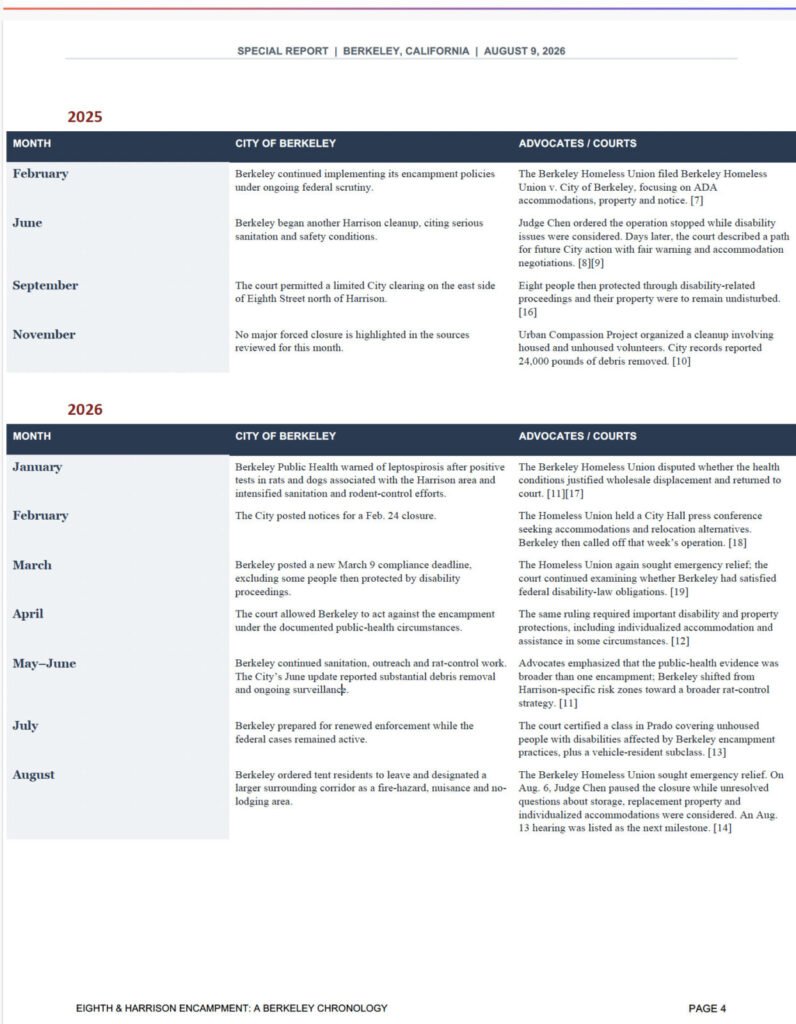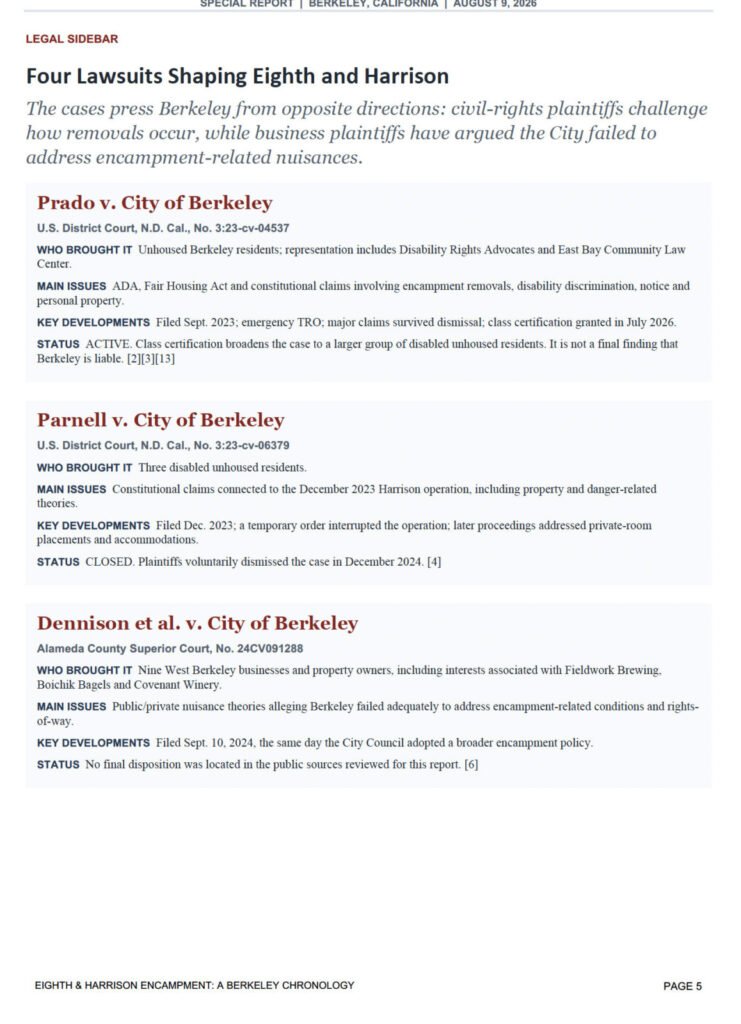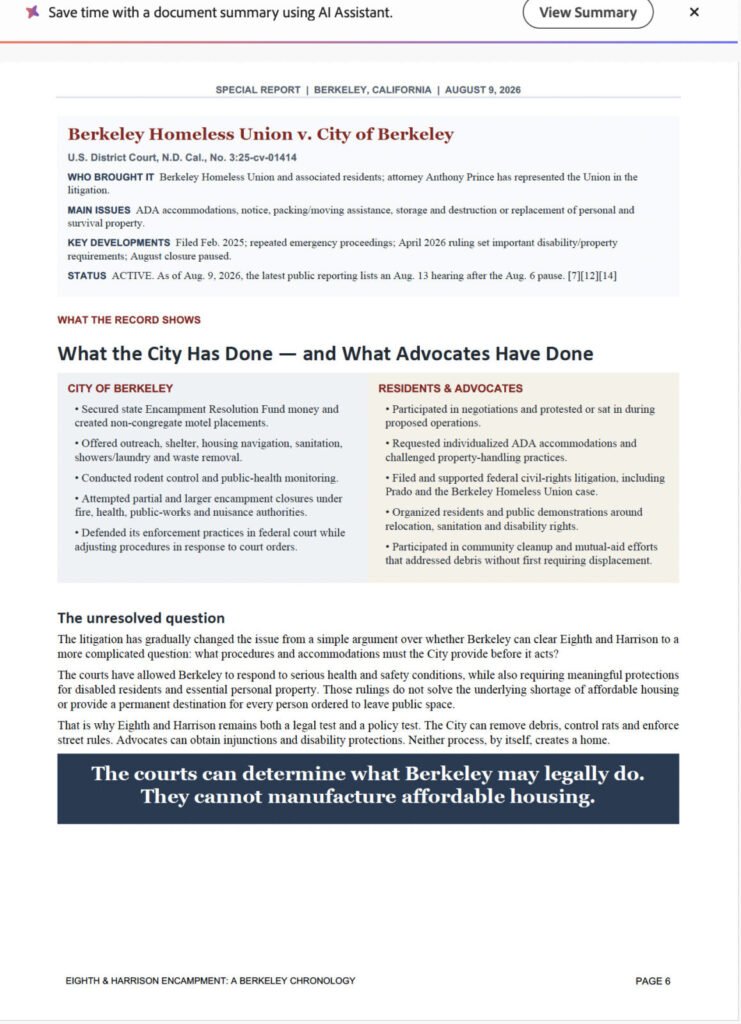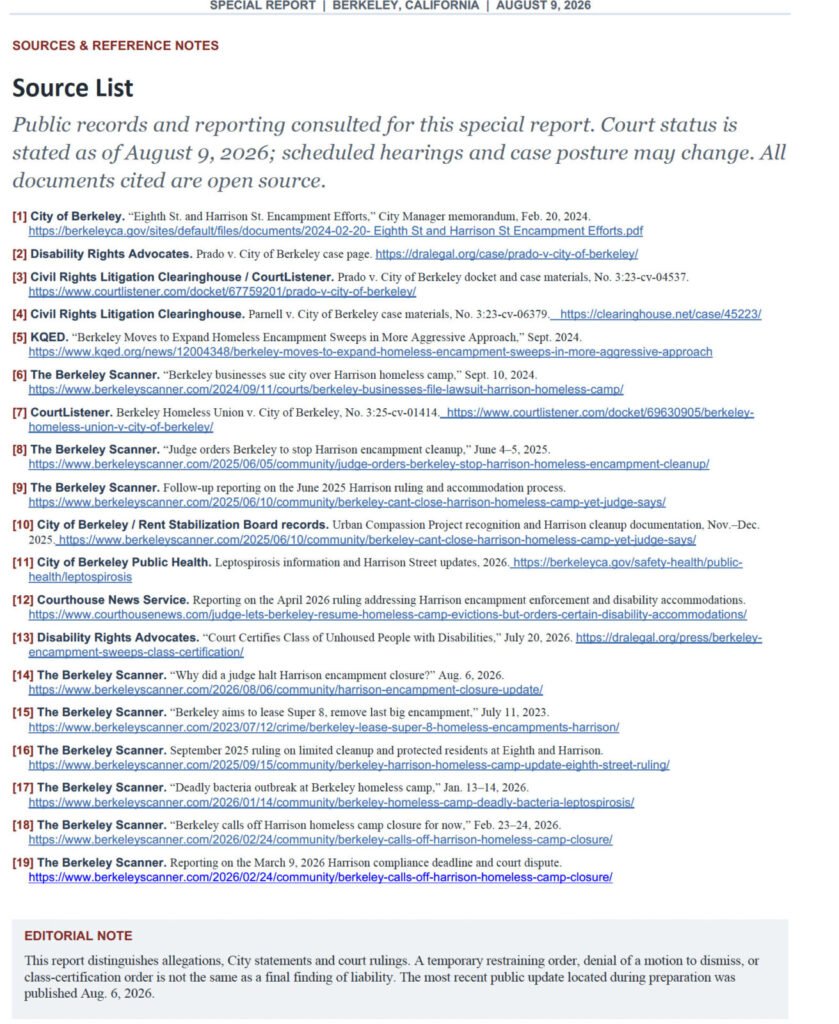
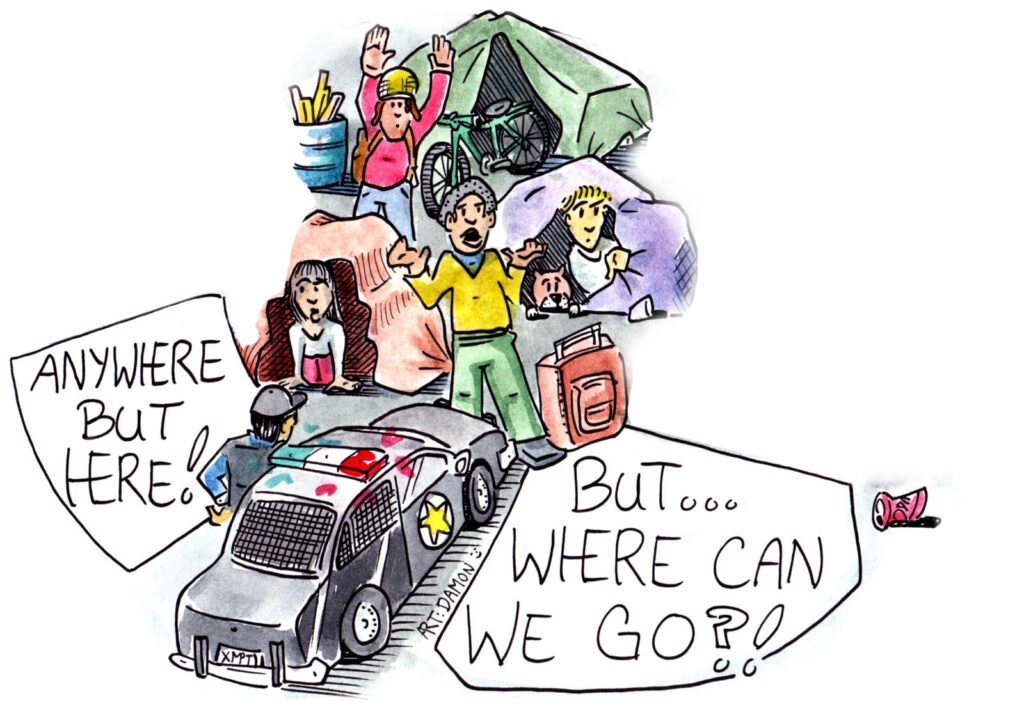
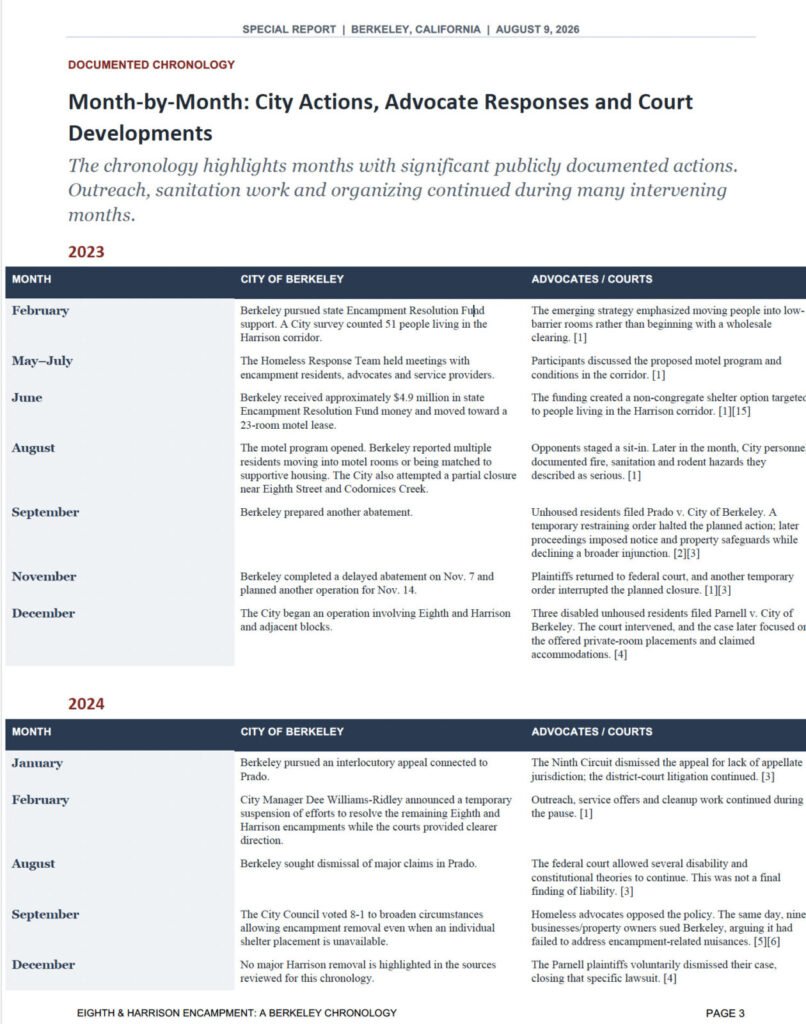
Month by month, Berkeley’s largest encampment conflict has moved from motel placements and street cleanups to federal court.
Here is what you will find in the complex reporting below:
Over the summer, Berkeley Speaks staff compiled a comprehensive history of the struggle over the encampment since 2023.
In September, before we could publish that study, the situation blew up with court rulings and a big police sweep of the encampment. Berkeley Speaks quickly wrote two updates on September 15 and September 19 to explain these events.
We have arranged these three reports with the latest first, so you can begin wiht the most current information on the late September sweep (Sept. 19 update); then get immediate background on the federal judge’s ruling (Sept. 15 update); and finally, read our four-page Special Report at bottom for the historical background.
Eighth and Harrison update — September 19, 2026
This update summarizes the publicly documented activity at the Eighth and Harrison Street encampment in Berkeley from September 15 through September 19, 2026, and identifies the next steps that remained unresolved as of September 19.
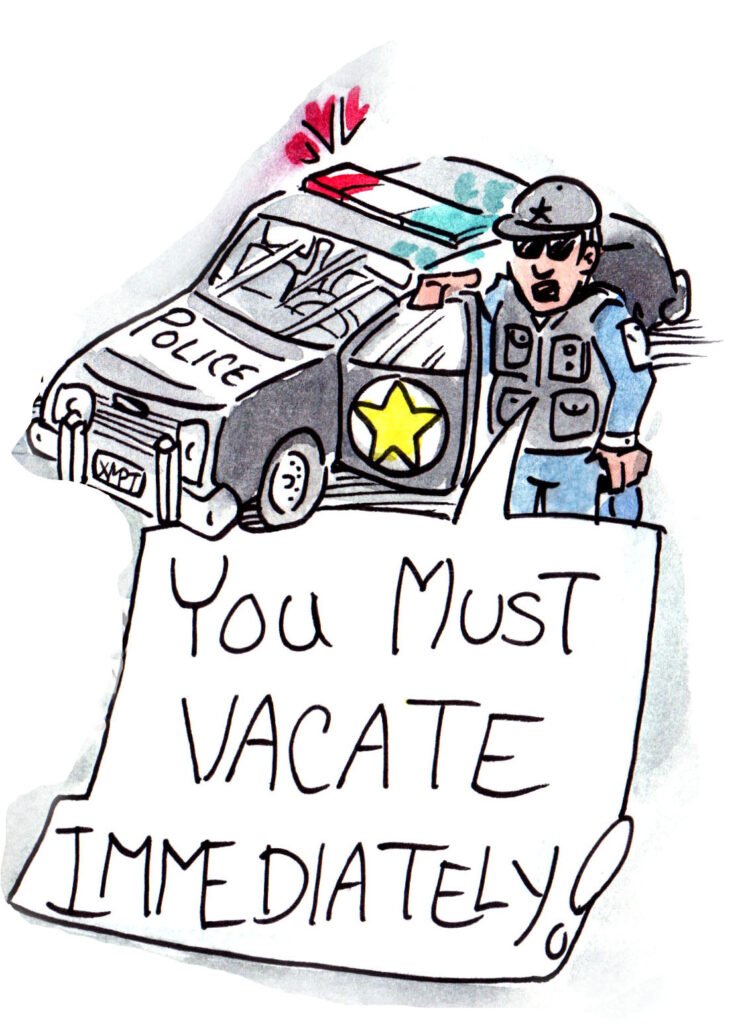
On September 15, the City of Berkeley began the delayed closure and cleanup of the Harrison Street corridor. The City had issued a new notice of closure on September 11 after postponing an earlier operation planned for September 8.
During the operation, Berkeley police officers and City crews directed residents to remove tents, vehicles where applicable, and personal belongings from the closure area. Cleanup crews dismantled structures and removed accumulated debris. Contemporary reporting estimated that about 80 people had been living in the corridor before the operation began.
The closure did not cancel the disability protections established in the federal court proceedings. Residents with documented disabilities could request temporary exemptions, additional time, help packing or moving belongings, and other individualized accommodations. Berkeley Homeless Union volunteers were present to help residents and observe the process.
From September 15 through September 19, the cleanup and displacement process continued. The available public record reviewed for the report did not provide a reliable day-by-day account for September 16, 17, 18, and 19. It also did not establish how many residents received shelter or housing placements, where every displaced person went, or whether all property and storage disputes had been resolved.
The City’s immediate plan was to continue the closure and cleanup of the Harrison corridor and to enforce the area’s fire-hazard, public-nuisance, and no-lodging designation. The City also remained responsible for providing court-required disability accommodations, including assistance with packing and moving when necessary and protections for essential personal and survival property.
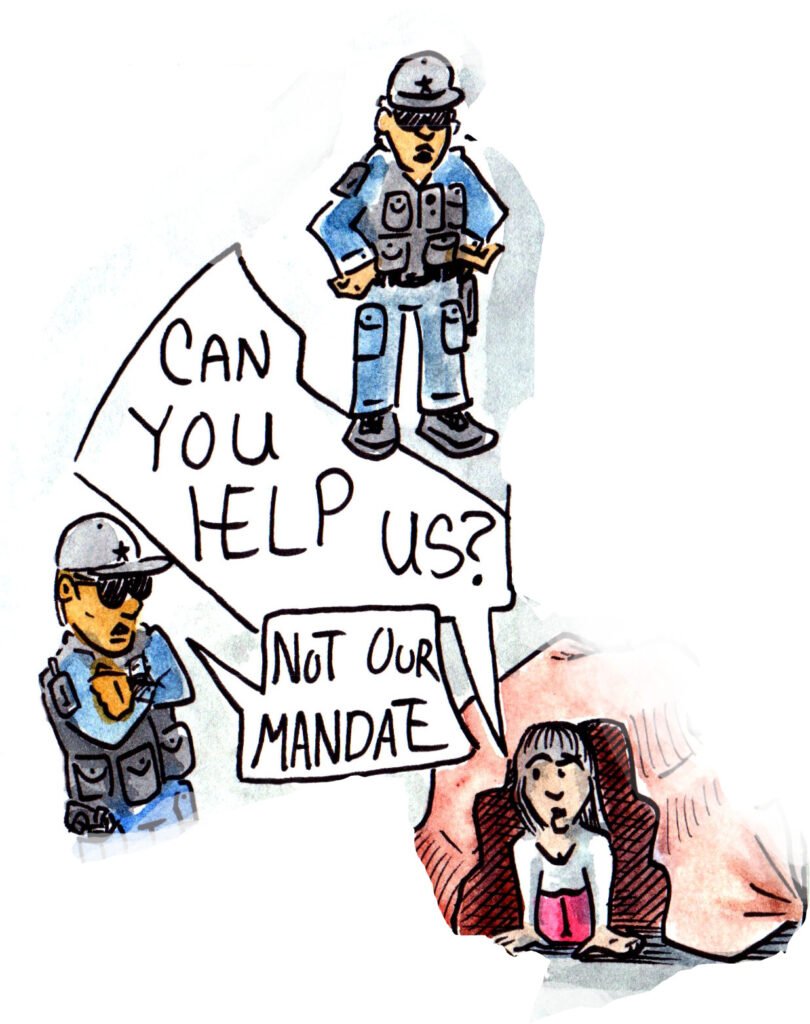
Further court proceedings were expected in the active Berkeley Homeless Union and Prado cases. The unresolved issues included disability accommodations, storage or replacement of property, treatment of residents who could not move without assistance, and possible relocation options. Earlier inspections of proposed outdoor relocation sites had found most locations unsuitable, and one Camelia Street location reportedly had room for only two people.
As of September 19, there was no publicly documented permanent relocation plan for every resident. The most important future questions were whether displaced residents would receive suitable shelter or housing, whether the City would complete the cleanup while complying with the federal court’s protections, and how the ongoing lawsuits would affect future encampment enforcement in Berkeley.
Eighth and Harrison update — September 15, 2026
Berkeley now has judicial permission to proceed with clearing most of the Harrison Street encampment, but seven residents remain temporarily protected.
At a September 8 hearing, U.S. District Judge Edward Chen ruled that:
- The city may conduct the encampment closure after giving affected residents at least 72 hours’ notice.
- Seven disabled residents cannot yet be displaced. Their requested relocation sites and disability accommodations must first be evaluated.
- The court denied immediate protection to 21 other residents. This includes people who requested city-owned lots, did not specify a relocation site, or did not adequately explain why disability-related belongings had to remain outside their vehicles.
- These denials were “without prejudice,” meaning residents may submit better-supported accommodation requests later.
- The judge intends to appoint Magistrate Judge Ajay Krishnan as a special master to decide unresolved accommodation disputes. Federal court order, September 9.
Where relocation negotiations stand
Two protected residents proposed moving to Fourth and Camelia Streets. The city called that location potentially viable but disputed the requested tent sizes.
Five others proposed locations around Second Street at Page or nearby addresses. Berkeley rejected those locations because it had designated them “No Lodging/TNC Prohibited” areas. Judge Chen found that the city had not adequately explained the basis for those designations and temporarily protected these residents while negotiations continue.
The parties must submit another joint report by September 18 concerning those five residents. That is now the key upcoming legal deadline.
What happened to the planned September 8 sweep?
Earlier reports said Berkeley postponed the September 8 operation while the court considered the individual relocation requests. The September 9 order subsequently authorized the city to move forward against most residents. San Francisco Standard
We have not found reliable confirmation that Berkeley has completed a comprehensive clearance of the entire corridor. The best current description is therefore:
The encampment is legally cleared for partial abatement, but the closure remains incomplete and seven residents’ cases are still under court supervision.
Larger significance
The Berkeley Homeless Union did not win a permanent right for people to remain at Eighth and Harrison. It did, however, obtain continuing citywide protections requiring Berkeley to provide notice, individual disability review, moving assistance when necessary, property storage, and replacement survival gear in specified circumstances. Vehicles used as shelter also cannot simply be destroyed or impounded without individualized safety findings. KALW
The next meaningful update should come from the September 18 court filing, followed by any city announcement establishing a new closure date.
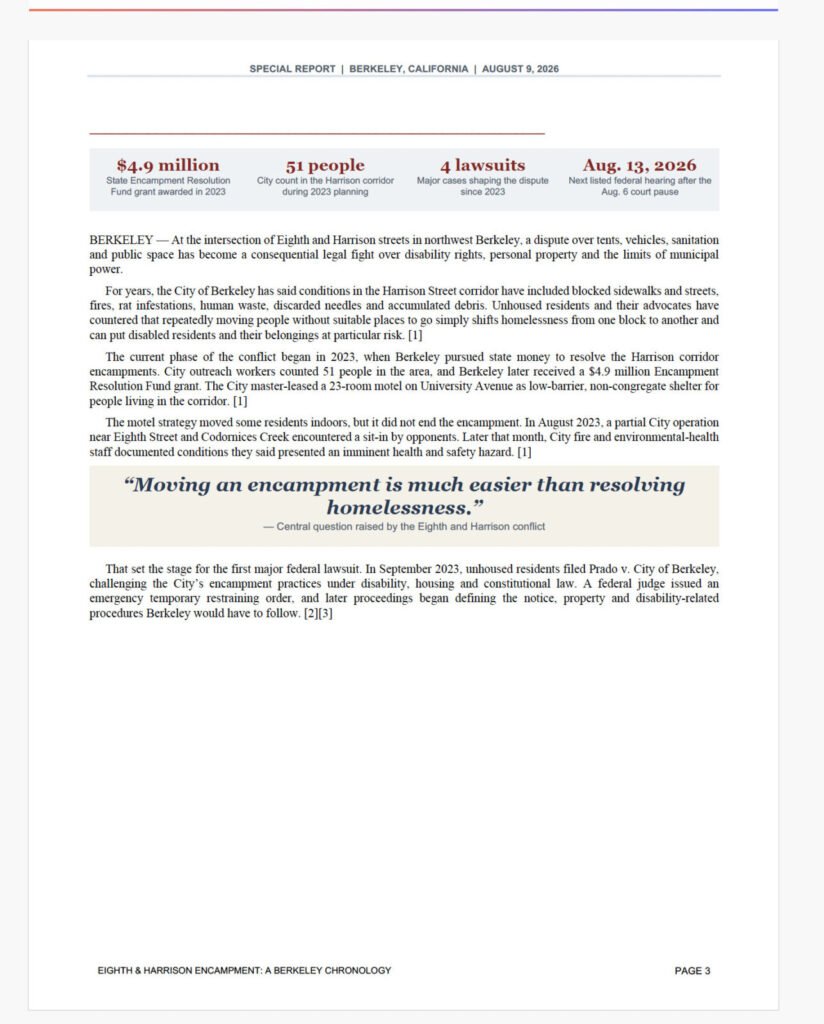
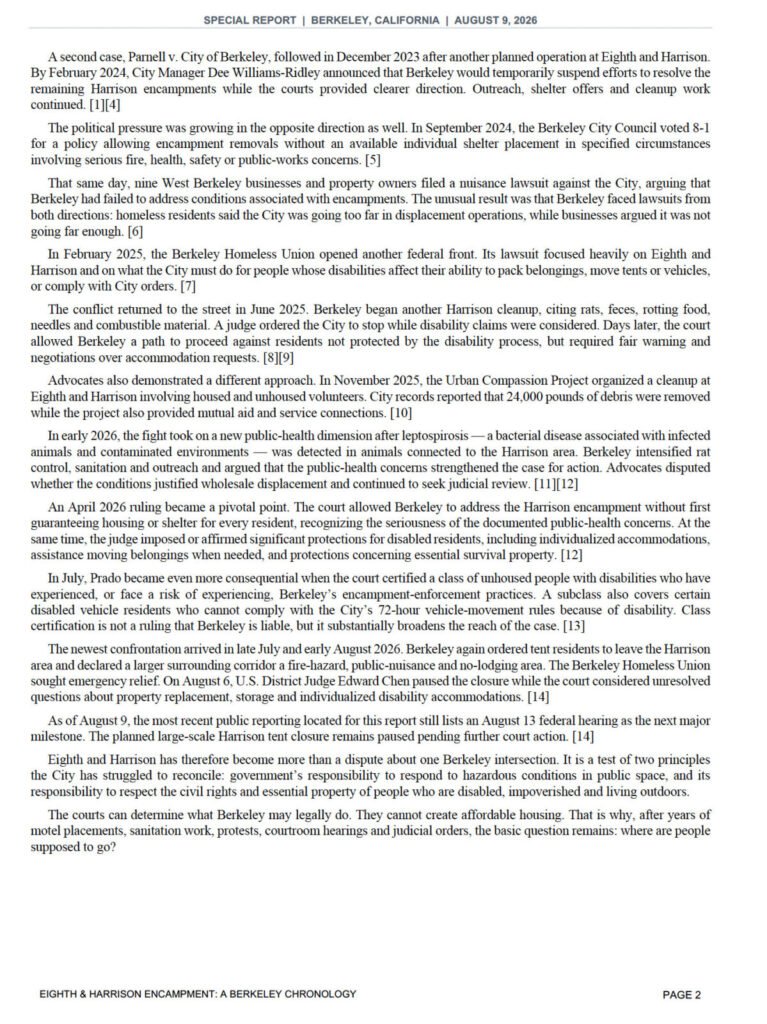
Month by month, Berkeley’s largest encampment conflict has moved from motel placements and street cleanups to federal court.