
Click here for Editorial I: Berkeley, Tell the Truth on Surveillance
Berkeley does not suffer from a shortage of politics. What it sometimes lacks is enough governing. That distinction should be at the center of the 2026 City Council election. Berkeley is one of the most politically engaged communities in the country. Residents attend meetings, organize neighborhoods, challenge authority, advocate for tenants, defend the environment, debate development and demand social justice. This civic energy is an extraordinary asset. It has helped Berkeley become a laboratory for progressive public policy for generations.
But political engagement alone does not produce effective government. At its worst, Berkeley politics can become consumed by ideological divisions, personal rivalries, procedural battles and the need to establish who occupies the morally correct position on an issue. Council meetings can become arenas for political theater when they should primarily be places where difficult choices are made and public business gets done.
This is not merely an abstract concern. In 2024, after resignations and internal turmoil, Berkeleyside asked whether the City Council itself was “broken,” observing that the Council was attracting attention for internal drama rather than policy decisions. Today Berkeley faces challenges that leave little room for government by distraction.
Berkeley’s own City Auditor has warned of a persistent structural deficit, growing infrastructure needs and long-term financial pressures. The City Manager’s 2026 budget proposal called for significant reductions to bring ongoing spending into alignment with ongoing revenues. These are governing problems. They cannot be solved by rhetoric.
Neither can homelessness, housing affordability, public safety, deteriorating infrastructure, struggling commercial districts, climate resilience or the frustration many residents experience simply trying to navigate city government. The next generation of Berkeley councilmembers therefore needs to approach public office differently.
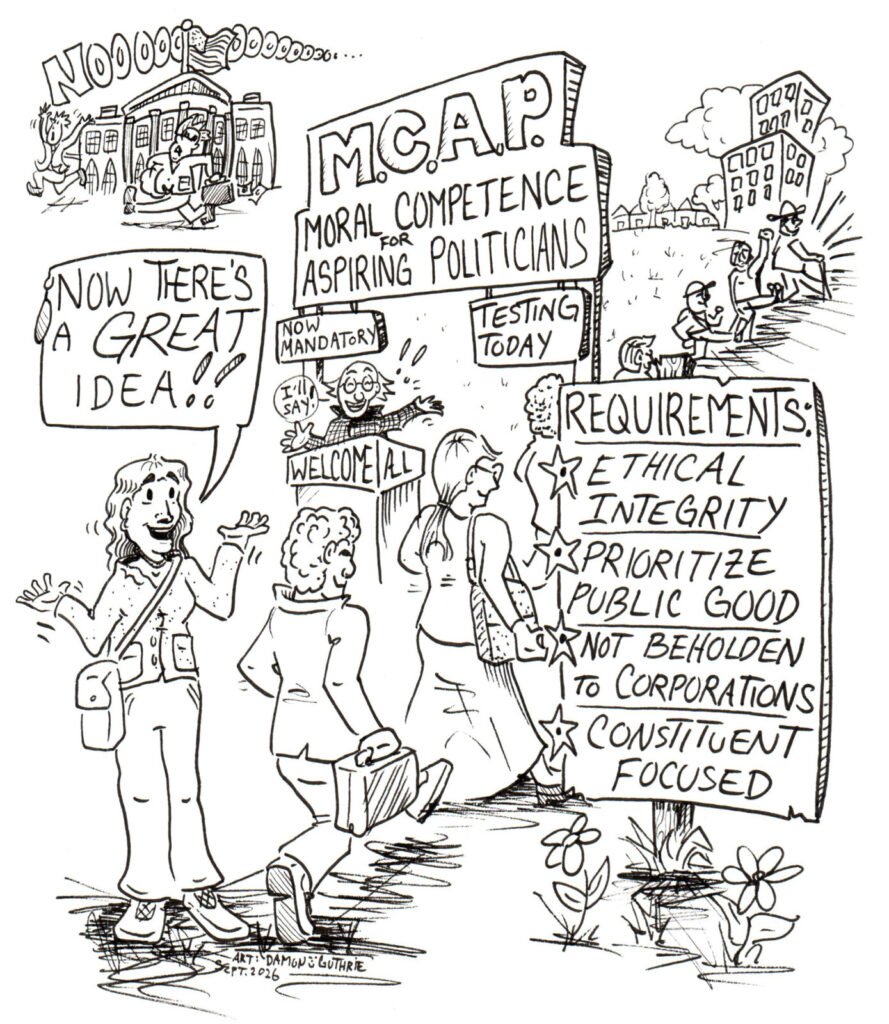
The first requirement is to understand that campaigning and governing are fundamentally different activities. Campaigns reward differentiation. Candidates explain how they are different from their opponents, assemble political coalitions and make promises. Governing requires almost the opposite instinct. Once elected, a councilmember must find common ground, establish priorities, make compromises, understand administrative limitations and persuade colleagues to form majorities. Election Day should therefore mark the end of the campaign, not the beginning of a four-year permanent campaign.
A councilmember no longer represents only the people who endorsed, volunteered or voted for that candidate. The residents who supported an opponent are constituents too. So are people who never attended a political meeting, never contributed to a campaign and may disagree strongly with City Hall. Good government begins with that understanding. Introducing legislation is not success. Passing a resolution is not necessarily success. Creating a program is not success. Holding a press conference is certainly not success.
The question is what happens after getting elected. If the Council makes homelessness a priority, are fewer people living on Berkeley’s streets a year later? If it approves housing, is that housing actually being built? If it establishes a public-safety initiative, are residents safer? If it funds a new program, can the city demonstrate that the program produced results worth its cost?
Berkeley’s own City Auditor has emphasized the need for improved performance measurement, and recent audits have identified weaknesses ranging from contract procedures to tracking outcomes in homeless-response programs. The lesson is broader than any single audit. A government that cannot clearly measure what its programs accomplish will eventually lose the confidence of the public paying for them.
Berkeley has more aspirations than money. Every organization coming before the Council can make a persuasive argument that its cause deserves support. Many of those causes genuinely do. But leadership is not the ability to endorse every worthy objective. Leadership is deciding which responsibilities come first. The city’s financial situation makes that discipline unavoidable. Berkeley’s auditor reported projected General Fund deficits of roughly $32 million for fiscal year 2027 and $33 million for fiscal year 2028 based on estimates early in 2026, while also identifying substantial long-term capital and maintenance needs.
Fighting for fiscal responsibility is not the same as a call for austerity. Recent candidates in Berkeley have supported progressive measures such as a commercial vacancy tax, better tracking of existing revenue sources, and opposing tax giveaways to large business, as well as high overtime for police officers.
A progressive city cannot indefinitely separate its social ambitions from its financial capacity. Fiscal responsibility and compassion are not opposing values. Without a financially sustainable government, Berkeley will ultimately have less ability to provide services, protect vulnerable residents and invest in the future. Councilmembers must also learn how to disagree without making government unworkable. There will always be profound differences over housing, development, policing, taxation, transportation and homelessness. Those disagreements are legitimate. Democracy is not supposed to eliminate conflict.
Governing requires recognizing that political opponents are not necessarily enemies and compromise is not necessarily betrayal. No councilmember can govern Berkeley alone. Five votes are generally required to move policy. Effective councilmembers will therefore need relationships with colleagues who see the world differently. They must learn where agreement is possible and recognize the knowledge and strengths of people outside their own political faction.
When elected officials micromanage government, accountability becomes blurred. When the Council clearly establishes what it expects and professional staff are held responsible for executing those expectations, residents can determine who is responsible when something succeeds or fails. Most important, Berkeley needs leaders willing to admit when something is not working. Politics encourages elected officials to defend their previous decisions. Governing requires something more difficult: learning.
A policy that seemed promising may fail. A program may cost more than expected. A well-intentioned regulation may have unintended consequences. New evidence may contradict old assumptions. There should be no political shame in saying, “We tried this, we measured the results, it did not work as intended, and we are going to change it.”
That is not weakness. It is competent government.
At the end of four years, residents should be able to ask whether homelessness declined, whether housing became more attainable, whether city services improved, whether neighborhoods felt safer, whether infrastructure was better maintained, whether businesses could operate successfully, whether public money was spent responsibly and whether people felt that City Hall listened to them.
They should also be able to ask whether the Council itself became a more functional institution. That may be the most important challenge facing Berkeley’s next generation of leaders. The city does not need less idealism. Berkeley would cease to be Berkeley without it. But idealism without execution eventually becomes frustration. The task of the people elected in 2026 is to demonstrate that progressive values and effective government can coexist—that one can be ambitious without being impractical, principled without being rigid, passionate without being divisive and politically courageous without treating every disagreement as a battle.
Berkeley’s next councilmembers will certainly tell us what they believe.
The more important question is whether they can show us that they can govern.